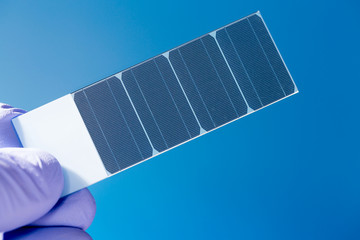
Researchers Work on Genetically Engineered Solar Cells

Solar, Roof, Solar Energy

An alumnus of Keller Graduate School of Management in Phoenix, Arizona, Steve Verschoor is a seasoned entrepreneur and engineering professional who co-founded GTSP Global. As head of sales, Steve Verschoor oversees the solar manufacturing company’s sales team and has landed a slew of polysilicon and solar company deals worldwide.

Researchers have made significant progress in developing solar cells made from organisms. This novel technology is called a biogenic solar cell. These genetically modified cells can work in low-light conditions and have great potential to augment existing technologies in the future. The objective of this study is not to replace existing solar power-generating materials but to increase solar yields in places where sunlight is of very low intensity.

Solar energy is the most flexible renewable energy source, with a greater return on investment than either wind or hydropower. Wind and hydropower can meet various demands, but solar energy can transform society and human lives if used efficiently. Research is ongoing with the primary goal of reaching solar technology’s full potential.

An Introduction to Solar Paints – Promising Solar Technologies

An accomplished Boise, Idaho-based energy entrepreneur and executive, Steve Verschoor has served as the head of sales of GTSP Global since 2006. Steve Verschoor specializes in the sales and manufacturing of solar panel parts.

More ways to obtain solar energy have been made possible by new photovoltaic technologies. Solar paints are one of the most recent advancements in the industry.

As their name indicates, solar paints are unique paints that are applied to a variety of surfaces, including roofs and walls. The paints include billions of bits of light-sensitive material, which would convert ordinary paint into super-charged energy-capture paint. The best part about solar paint is how simple and inexpensive it is to apply in terms of residential homes.

Solar paint is currently a subject of further studies. Many colleges and research organizations have developed their versions of solar paint with considerable success. Quantum dot solar cells are a good example of these.

Quantum dot solar cells were developed by University of Toronto researchers to enhance the efficiency of solar cells by up to 11 percent. This technology incorporates nanoparticles that increase light absorption, especially in the near-infrared range.

Projecting the United States Solar Power Demand by 2050

Solar System, Roof, Power Generation

With extensive leadership experience, Steve Verschoor co-founded GTSP Global in 2006 and has since successfully managed the solar manufacturing company. Steve Verschoor oversees the company’s business development as well as its manufacturing and sales of solar power.

Compared with many other low-carbon technologies, solar electricity offers a distinct advantage in that much of the United States receives plenty of sunlight. Wind, hydropower, and geothermal resources are not equally distributed as there are huge areas where these resources are insufficient or nonexistent.

The Solar Futures Study published by the Energy Department lays out some future paths for the United States grid, including business, and decarbonization, showing a massive shift to low-carbon and carbon-free energy sources. The study finds that decarbonization would necessitate 1,050-1,570 gigawatts of solar power to fulfill 44-45 percent of projected electricity demand in 2050.

One gigawatt of generating power is around 3.1 million solar panels or 364 large-scale wind turbines in comparison. The remainder would come mainly from a mix of various low- or zero-carbon sources, such as nuclear energy, wind, hydropower, biopower, and synthetic fuel-powered combustion turbines.

The Future of Solar Energy

Electrical engineer Steve Verschoor is a Boise, Idaho resident who holds a bachelor’s degree in electrical engineering from Keller School of Management in Phoenix, Arizona. Steve Verschoor co-founded GTSP Global in 2006 and has served as the head of sales since then. He is in charge of all the sales, business development, and securing business contracts for the solar energy company.

As of 2017, the United States has 1.3 million photovoltaic (PV) installations, totaling 40 gigawatts of installed solar capacity, nearly double the amount added just a year before. Solar development costs are dropping at an average of 4.4 percent per year worldwide, and government initiatives like the Investment Tax Credit (ITC) have helped incentivize projects across the country. As a result of this expansion, the solar sector now employs over 260,000 Americans, adding additional employment every year.

At present, solar provides just around one percent of the world’s energy resources; however, it is quite possible that in the next 30 years, this number may rise to as high as 27 percent. Energy experts at the International Energy Agency (IEA) believe this growth is not far-fetched from reality, especially as current solar technology improves.

Solar energy systems, such as solar farms and concentrated solar power (CSP) plants, would become the world’s most valuable energy resource in the future, providing more energy than fossil fuels, hydropower systems, and wind while decreasing carbon emissions by roughly 6 billion tonnes per year.

US Government Intent on Making Solar Major Power Source

Steve Verschoor co-founded GTSP Global and serves as the company’s head of sales, with responsibility for securing solar/polysilicon business contracts. Beyond this role, Steve Verschoor is active in the solar industry; he attends solar power conferences and keeps up with federal policy changes that could impact solar power adoption.

In August 2021, the US Department of Energy published a memo stating that solar could supply over 40 percent of US electricity by 2035 if Congress adopts favorable policies like tax credits for industry companies. The memo forms part of President Joe Biden’s push to position solar as an alternative to fossil fuels and an engine for job growth.

Today, solar contributes only 3 percent of the country’s power. According to a study by the National Renewable Energy Laboratory, the industry needs to triple or quadruple its growth rate to contribute half of the country’s power. While there are several factors that could help propel this growth, White House Climate Advisor Gina McCarthy singled out tax credits as the real drivers.

Currently, solar projects qualify for a 26 percent tax credit, but this is set to expire soon. President Biden has, however, shown support for a 10-year extension of the credit program.

Polysilicon Uses in the Solar and Electronics Industries

For 18 years, Steve Verschoor worked at Applied Materials in Santa Clara, California, serving in various roles before leaving to co-found GTSP Global in 2006. Functioning as GTSP’s head of sales, Steve Verschoor is responsible for securing business contracts for the company’s polysilicon product.

Polysilicon is a highly refined form of silicon used to make solar photovoltaic cells as well as semiconductors for computers, smartphones, and electric cars. It is formed from quartzite, a type of sandstone rock containing 90-99 percent quartz. The quartzite is first combined with carbon in an arc furnace to produce metallurgical grade silicon, which is then treated with hydrochloric acid to form trichlorosilane. The trichlorosilane is then reacted with hydrogen to get polysilicon with a purity of 99.999 percent or above.

Most of the world’s polysilicon (over 90 percent) is used to make solar photovoltaic panels. Less than 10 percent is used to make semiconductors. However, it is the semiconductor industry that uses the highest-purity polysilicon (99.999999 percent pure). Solar panel manufacturers are more lenient and can use polysilicon that is 99.9999 percent pure.

The Popular Use of Polysilicon in the Solar Industry

Having obtained his bachelor’s of science degree from the Keller School of Management in 1988, Steve Verschoor has had a long career as an electrical engineer and salesperson. Presently, Steve Verschoor is the head of Sales at GTSP Global, where he has secured several polysilicon contracts.

Polysilicon is also known as polycrystalline silicon, multi-crystalline silicon, or poly-Si. It is a polycrystalline form of silicon produced from metallurgical grade silicon through a chemical purification process called Siemens. The Siemens process involves the distillation of silicon compounds after exposing them to high temperatures, decomposing them into silicon.

Polysilicon is a raw material in the solar photovoltaic and electronic industry. In 2006, more than 50% of polysilicon supply worldwide was being used by photovoltaic manufacturers. In 2007, a shortage in the supply of polysilicon feedstock affected the solar industry. In May 2021, a Bloomberg article reported that the quadrupling cost of polysilicon is preventing the further growth of solar energy in various areas of the world. Polysilicon is a popular choice for producing solar energy materials because the cost of production is lower, leading to higher profits and output.

Polysilicon for Solar Cells – Manufacturing Overview

hand holding polycrystalline silicon, polysilicon hand holding polycrystalline silicon, polysilicon polycrystalline silicon stock pictures, royalty-free photos & images

With a bachelor’s degree in electrical engineering from Keller School of Management in Phoenix, Arizona, Steve Verschoor co-founded GTSP Global, Inc., a Boise, Idaho-based solar panel parts manufacturing company, where he oversees the company’s sales team. As the company’s head of sales, Steve Verschoor has negotiated and secured numerous contracts with clients worldwide, including GCL Solar in China, OCI Polysilicon in South Korea and VRV Polysilicon in Italy.

The raw material for manufacturing pure silicon is quartzite, a fine to medium grain rock made up entirely of pure quartz sand. Quartzite is composed mostly of quartz, which has the greatest percentage of pure silica of any known mineral (between 90 and 99 percent).

Raw polycrystalline silicon, often known as polysilicon, is high-purity silicon used in the solar photovoltaic (PV) manufacturing sector. It is now the most common feedstock material used in the manufacturing of solar cells. Large rods of polysilicon are often split into pieces or chips of various sizes before forming multi-crystalline ingots. After that, the ingot materials are cut into silicon wafers used to make solar cells.

How Do Photovoltaic Cells Work?

Steve Verschoor is the co-founder of GTSP Global, Inc, in Boise, Idaho. As the head of sales, Steve Verschoor is responsible for business development.

GTSP Global manufactures various parts used in solar panels. These solar panels use photovoltaic cells to generate power. Photovoltaic cells comprise semiconductors, such as silicon, which is the most often used today. When light reaches the cell, a part of it is absorbed by the semiconductor material. The absorbed light’s energy is carried to the semiconductor in this way. The energy dislodges electrons, enabling them to flow freely.

Photovoltaic cells also feature one or more electric fields that drive electrons freed by light absorption to travel in a particular direction. This flow of electrons is a current. By connecting the top and bottom of the PV cell with metal contacts, one can extract that current for external use, such as powering a calculator. The current and the voltage determine the power or wattage that a solar cell can generate.

Typical Sizes and Power Output of Photovoltaic Cells

A successful sales professional spanning more than three decades of professional experience, Steve Verschoor is the co-founder of GTSP Global and oversees all sales and business operations of the company. Steve Verschoor has attended several solar power and photovoltaic conferences worldwide and has extensive knowledge of how various photovoltaics operate.

Solar photovoltaic cells convert solar energy (from sunlight) into electrical energy, which helps drive electrical current in circuits for various uses. On the quantum scale, solar energy comes from wavelike particles of radiant sunlight called photons. Depending on the wavelength of the light spectrum, each photon contains a specific amount of energy. The energy of the photons is absorbed by solar cells.

Solar cells vary in individual sizes, ranging from 1cm to 10cm across. At optimum capacity, cells of these sizes can produce 1 or 2 watts of electricity which is not enough to power most electronics. To increase power output to a sufficient level, multiple solar cells are connected to form an array of modules.

Design a site like this with WordPress.com
Get started