About LTCF COVID-19 Module

Close-up researcher working with microscope Free Photo

An experienced engineer and sales professional, Steve Verschoor has served as vice president and head of sales at GTSP Global, Inc., a company specializing in the manufacture of solar panel parts, for more than a decade. In addition to his executive position at GTSP Global, Steve Verschoor co-founded Molecular Testing Labs, which currently provides COVID-19 testing.

The National Health Safety Network (NHSN) of the Centers for Disease Control and Prevention (CDC) provides a secure reporting platform for healthcare institutions, such as long-term care facilities (LTCFs), to report outcomes and process measurements systematically for infectious diseases, including COVID-19. Reported data is instantly accessible for improving local and national surveillance, detecting resource vulnerabilities, tracking infection rate trends, and influencing progress toward infection prevention targets.

While NHSN is not selective regarding the type and nature of infection in question, the platform dedicates significant focus to the ongoing coronavirus pandemic. Staffing shortages, monoclonal therapeutic availability and use, COVID-19-related death counts among residents and facility personnel, COVID-19 re-infections in residents and facility personnel previously infected with COVID-19, and COVID-19 vaccination status of residents newly positive for COVID-19 are some examples of these data.

What Is Antibody Testing?

Before co-founding GTSP Global, Inc. in Boise, Idaho, Steve Verschoor worked in the industrial materials and finance sectors. Steve Verschoor is the co-founder of Molecular Testing Labs (MLT), involved in novel coronavirus testing and antibody testing.

An antibody test looks for antibodies in the blood. When the body fights an infection, such as COVID-19, it produces antibodies. When a person gets vaccinated, such as a flu shot, the same process occurs. This is how a person develops immunity to a virus.

The antibody test doesn’t detect the virus. Instead, it examines how the immune system, the body’s natural defense against infection, has reacted to the infection. To conduct an antibody test, a technician will take a little amount of the blood through a finger prick. SARS-CoV-2, the virus responsible for causing COVID-19, is tested for one or both types of antibodies. Immunoglobulin M (IgM) antibodies are produced early in an infection.

About 14 days following the symptoms’ appearance, most people develop Immunoglobulin G (IgG) antibodies. They frequently remain in the blood for a long time after the infection is gone.

If the test results are positive for SARS-CoV-2 antibodies, then the person most probably had the virus. If it’s negative, the person is not infected or has not developed the antibodies in time even though they had the virus.

How Do Photovoltaic Cells Work?

Steve Verschoor is the co-founder of GTSP Global, Inc, in Boise, Idaho. As the head of sales, Steve Verschoor is responsible for business development.

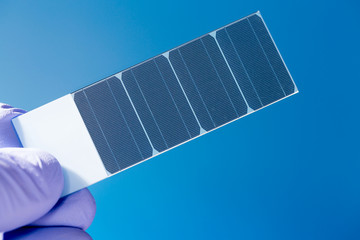
GTSP Global manufactures various parts used in solar panels. These solar panels use photovoltaic cells to generate power. Photovoltaic cells comprise semiconductors, such as silicon, which is the most often used today. When light reaches the cell, a part of it is absorbed by the semiconductor material. The absorbed light’s energy is carried to the semiconductor in this way. The energy dislodges electrons, enabling them to flow freely.

Photovoltaic cells also feature one or more electric fields that drive electrons freed by light absorption to travel in a particular direction. This flow of electrons is a current. By connecting the top and bottom of the PV cell with metal contacts, one can extract that current for external use, such as powering a calculator. The current and the voltage determine the power or wattage that a solar cell can generate.

Typical Sizes and Power Output of Photovoltaic Cells

A successful sales professional spanning more than three decades of professional experience, Steve Verschoor is the co-founder of GTSP Global and oversees all sales and business operations of the company. Steve Verschoor has attended several solar power and photovoltaic conferences worldwide and has extensive knowledge of how various photovoltaics operate.

Solar photovoltaic cells convert solar energy (from sunlight) into electrical energy, which helps drive electrical current in circuits for various uses. On the quantum scale, solar energy comes from wavelike particles of radiant sunlight called photons. Depending on the wavelength of the light spectrum, each photon contains a specific amount of energy. The energy of the photons is absorbed by solar cells.

Solar cells vary in individual sizes, ranging from 1cm to 10cm across. At optimum capacity, cells of these sizes can produce 1 or 2 watts of electricity which is not enough to power most electronics. To increase power output to a sufficient level, multiple solar cells are connected to form an array of modules.

Sample Types for COVID-19 Testing

An engineering professional drawing on several decades of experience, Steve Verschoor co-founded GTSP Global Inc., a Boise-based energy firm. Subsequently, Steve Verschoor founded Washington-based Molecular Testing Labs (MTL), an organization focused on the development of protocols and innovative medical testing solutions for the detection of contagious diseases, including COVID-19.

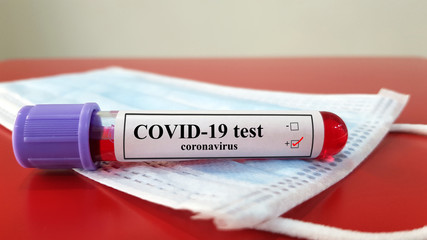
Currently, multiple COVID-19 tests are available which test for either a past or current infection. A serology test, also called an antibody test, tests for past infection, and does not diagnose a current infection. A viral test, on the other hand, can detect a current infection and will be one of two types – an antigen test or a nucleic acid amplification test (NAAT).

Generally, various tests are conducted using fluid samples with the aid of special testing devices. These samples include:

Saliva samples: Rather than using a nose or throat swab, saliva samples are collected using a tube into which a patient provides saliva.

Swab samples: Using a cotton swab, samples are collected from the nose or throat.

Blood samples: Used for antibody tests, blood samples determine if a patient has been infected by the virus in the past. These samples are collected by healthcare professionals.

Checking a Home Testing Kit for FDA Approval – COVID-19

An alumnus of the Keller School of Management in Phoenix with a BS in electrical engineering, Steve Verschoor is the co-founder of Molecular Testing Labs (MTL), which specializes in the testing and genomics of infectious diseases. Steve Verschoor and his team provide FDA-approved at-home COVID-19 testing kits for clients nationwide.

At-home tests for COVID-19 are quick and convenient testing options that can be done at home without risk. To ensure that consumers purchase safe and effective test kits, the Food and Drug Administration (FDA) approves high-standard kits that have been tested extensively.

To ensure that a purchased testing kit is approved by the FDA, consumers can visit the agency’s table of molecular, antigen, and serology, and adaptive immune response in vitro diagnostic emergency use authorizations (EUA). The tables provide sufficient information about authorized kits. Through the search box, filters and keywords can help navigate through the list. As newer tests are authorized by the FDA, the information is added to the tables.

Molecular Testing Labs and ZOOM partner for Accessible Testing

An engineering professional drawing on more than three decades of experience, Steve Verschoor serves as the head of sales at GTSP Global, a Boise, Idaho-based company specializing in the manufacture of solar panel parts. Steve Verschoor is also the co-founder of Molecular Testing Labs in Washington, an organization that develops wellbeing protocols for the prevention of contagious diseases, including COVID-19 test development.

During the first quarter of 2020, the COVID-19 pandemic struck the Pacific Northwest of the United States to an unprecedented extent; healthcare systems saw a severe shortage of testing capabilities exacerbated by social restrictions that kept people from going to healthcare facilities for testing. Molecular Testing Labs partnered with ZOOM+Care to pilot COVID-19 self-testing solutions to patients to remove the testing barrier posed by isolation. PeaceHealth also supported the validation pilot.

With over 40 clinics across the Pacific Northwest, ZOOM+Care provides highly demanded retail and virtual healthcare. Peacehealth is a non-profit health care system with various medical facilities across Oregon, Washington, and Alaska.

DOH Partners with Molecular Testing Labs for Accessible Testing

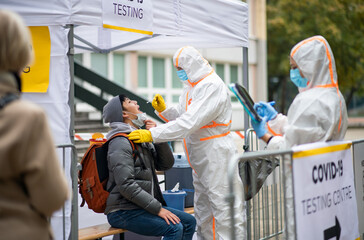
A Boise-based entrepreneur, Steve Verschoor has experience in the engineering and sales sector spanning more than three decades. Steve Verschoor is a co-founder of Molecular Testing Labs, a Washington-based testing and diagnostic facility that partnered with the Washington Department of Health to provide accessible testing for COVID-19 to the residents of nursing home facilities.

The Washington Department of Health (DOH) recognized the fact that patients in nursing home facilities have a high risk of contracting COVID-19 due to the congregate nature of the communities, which raises the rates of infection and mortality. To minimize risk, the DOH and Department of Social Health and Services (DSHS) provided COVID-19 safety guidance that many senior living facilities were able to adopt to protect their residents. However, chances of patient exposure could not be eradicated completely through conventional safety measures like visitor restriction, since personnel enter and leave the facilities frequently. An additional bottleneck is the fact that some infection carriers do not show symptoms, which means that screening methods like temperature checks may fail to identify a carrier. To maximize infection control efforts, new orders regarding patient and staff testing had to be put in place.

To ensure that all facilities could comply with the mandated COVID-19 testing without risking their safety, the State of Washington contracted with the University of Washington Department of Virology and Molecular Testing Labs in June 2020 to provide the required testing services. With the help of these organizations, the state provided personal protective equipment and test kits to residents and staff. Patients with Washington State Health Care Authority, or Centers for Medicare and Medicaid services protections also had their bills covered by the respective organizations.

Molecular Testing Labs Offers At-Home HIV Testing Kits

Idaho-based entrepreneur and sales professional Steve Verschoor graduated with a BS in electrical engineering from the Keller School of Management in Phoenix, Arizona. Steve Verschoor is a co-founder of Molecular Testing Labs, a provider of affordable innovative medical testing solutions for multiple diseases including COVID-19, HPV and other STIs.

In the wake of the isolation practices put into effect to respond to the COVID-19 pandemic in 2020, Molecular Testing Labs was one of the laboratories that adopted HIV testing through home specimen collection kits. This was particularly vital for patients receiving pre-exposure prophylaxis services, or PrEP. PrEP is a preventive treatment for HIV and involves taking daily pills either to reduce the risk of contracting the virus, or to treat contraction in the early stages in combination with other medicines.

To ensure that people could continue treatment for HIV, the Center for Disease Control and Prevention suggested two options for quarterly HIV testing: an oral swab test and a home specimen collection kit. Of the two, the home specimen kit is more accurate at providing results for patients undergoing PrEP. Molecular Testing Labs has validated protocols for testing home-collected samples, which allows patients to get themselves checked without risking the chances of contracting the COVID-19 infection by leaving their homes. The home specimen kits, which contain supplies to collect blood samples for analysis, are mailed to each patient’s home. Once the patients have collected samples themselves, they mail the kits back to the lab for analysis. The results of the analysis are then to the patients’ clinicians for necessary action. Importantly, the patient can feel confident in the lab sample collection and testing as both have been approved and recommended by the CDC as outlined in the following letter ( https://www.cdc.gov/hiv/policies/dear-colleague/dcl/051520.html ).

Managing HIV Prevention during the COVID-19 Crisis

After a nearly 20-year career with equipment and software supplier Applied Materials, Steve Verschoor co-founded Molecular Testing Labs, a research focused diagnostic laboratory. Steve Verschoor possesses a background in engineering and remains informed on developments in public health. He follows updates on the impact of COVID-19 on other health priorities, such as HIV prevention.

A report released by the CDC describes how the global response to treating and slowing the transmission of the novel coronavirus has led to barriers for HIV prevention protocols. For example, travel restrictions have limited the ability of many people to access HIV testing centers. Additionally, breakdowns in the global supply chain have caused medical supply shortages in many countries.

Governments around the world have worked to reverse these setbacks by promoting the use of at-home HIV tests and bundling preventative medications such as PrEP in 90-day prescriptions. The United Nations has advised that routine HIV and hepatitis C screenings for populations vulnerable to viral transmissions, such as people in the prison system, should be performed according to COVID-19 safety protocols.

Design a site like this with WordPress.com
Get started